


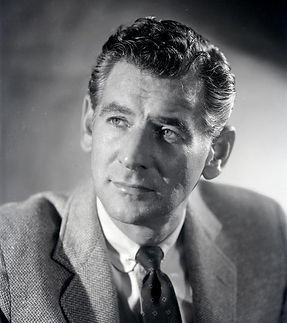


Schrezo from A Midsummer Night's Dream
Felix Mendelsshon
Mendelssohn’s Scherzo from A Midsummer Night’s Dream, a sprightly score composed for Shakespeare’s beloved play, evoking Puck’s playful pranks in the enchanted forest. Its buoyant beats and sparkling staccato conjure images of darting fairies and moonlit mischief, mirroring the capricious charm of dreams where romance and revelry intertwine.
Birds
Herman Beeftink
originally composed as a flute trio and re-imagined this afternoon for flute, violin, and cello. Birds unfolds in three movements—Birdsong, Flight, and Journey—that vividly evoke avian adventures through intricate, imitative textures and soaring melodic lines. As you listen, let it transform you into a nocturnal wanderer of the subconscious, where birdsong becomes the language of reverie, flight frees the imagination, and the journey mirrors the fluid, transformative paths of dreamscapes. Through its ethereal timbres and narrative arc, Birds invites us to dream of boundless skies and whispered secrets of the wild.
Après un Rêve
Gabriel Fauré
In this song, the speaker awakens from an ecstatic dream of love and light, only to find themselves returned to the solitude of waking life. Fauré’s flowing harmonies and long, suspended phrases capture the bittersweet ache of longing that follows beauty once it fades. The music hovers between fulfillment and loss, reflecting the way dreams often linger as both comfort and sorrow.
Dream With Me
Leonard Bernstein
Next is a tender and lyrical song from Leanord Bernsten’s Dream With Me, composed for the Broadway production Peter Pan. Dream With Me is sung by Wendy, the young girl who joins Peter in Neverland, as a gentle lullaby that reflects her longing for connection amidst the fleeting magic of childhood. The song is filled with innocence and unspoken longing. Its gentle melody evokes the bittersweet charm of childhood dreams and the desire to remain connected even when separation is inevitable. The song’s melody is simple yet poignant, with a flowing, almost improvisatory quality that evokes a sense of wistful dreaming.Bernstein’s signature warmth invites us into a dream where distance is softened by shared imagination.
Dream with me tonight.
Tonight and every night,
wherever you may chance to be.
we're together, if we dream
the same sweet dream.
And though we may be far apart,
Keep me in your heart
And dream with me.
The kiss we never dared
We'll dare in dreaming
The love we never shared
Can still have meaning.
If you only dream a magic dream
With me tonight
Tonight and every night
Wherever you may chance to be
Close your lovely eyes and dream with me.
The kiss we never dared
We'll dare in dreaming
The love we never shared
Can still have meaning.
If you only dream a magic dream
With me tonight
Tonight and every night
Wherever you may chance to be
Close your lovely eyes and dream with me.
Quiet Nights of Quiet Stars
Antonio Carlos Jobim
Famously associated with Frank Sinatra and composed by Antonio Carlos Jobim, set to lyrics by Gene Lees. In contrast to the yearning of the previous songs, this piece offers stillness and repose. Set against the calm of night, its lush harmonies and intimate tone create a dreamlike sanctuary where love feels close and enduring. Here, the dream is not fleeting, but gently sustained—an oasis of peace beneath starlit skies.
Ballade
Charles-Édouard Lefebvre
We continue now with Lefebvre’s Ballade for Flute, Cello, and Piano, Op. 37, a lyrical work that unfolds like a spoken story. Its expressive lines and sweeping gestures evoke the emotional contours of memory and imagination, where past and present blur together in a dreamlike narrative.
Op. 100
Amy Beach
Amy Beach’s Op. 100 comprises two evocative songs for soprano, violin, cello, and piano—"A Mirage" and "Stella Viatoris." These songs weave her lush Romantic style with poetic imagery. The first, “A Mirage” is set to text by the poet, B. Ochsner. The poem begins by describing purple mountaintops rising through a mist of silver clouds under the moon, which shines like a ghost in the pallid heavens through the evening shadows. The second stanza depicts a lofty eucalyptus stretching toward the heavens with drowsy westwind, sighing the theme of lamentation, depicting echoes of a heart’s unfulfilled longing.
Stella Viatoris begins with a mystical flurry of sound from the instruments, setting the stage for the Soprano to appear dazzlingly in the song with a whisper about the sky growing dark. The music winds on as the Soprano finds her way through moaning winds, past bare trees plying futile, weaving sadly and slowly, continuing on the theme of sad lamentation introduced in the first song, A Mirage. Stella Viatoris begins to gain energy with the wandering soprano until the text interjects a gripping “But.” But: that arresting word! But what? The text continues that over the east, the grim clouds part, a fleece of white, revealing a space of blue. With the music we feel the growing excitement: Aloft, afar! There’s a single shining star! The music accelerates to a grand climax in which the Soprano declares that the star is like “the kindness of God shining through.”
Amy Beach was an active member of the St. Bartholomew's Episcopal Church in New York City and, like many composers, wrote music inspired by her faith. During my university music studies, my cello professor would always tell me that music has the ability to connect people to the divine. I don’t think my teacher was a particularly religious person. But this lesson she taught has remained with me and rung true in my experience both as a musician, teacher and audience member. I have fond memories of sitting in concert halls, allowing my heart and mind to wander, taking the chance for spiritual introspection, as I listened to live performances. Please allow me to invite you to do the same now. Life is full of dark lamentations. But tonight, may you feel the kindness of God shining through to you.
A Mirage
Text: Bertha Ochsner
Now the mountaintop all purple
Rises thro’ a mist of silver
While the moon, a disc of cobwebs
Shining in the pallid heavens
Ghostlike thro’ the evening shadows
Now the lofty eucalyptus
Stretches forth its chalky branches
Toward the lovely, lustered heavens
While the drowsy westwind sighing
Sings the theme of lamentation
Stella Viatoris
Text: Jessie Hague Nettleton
Dun grows the sky
The cloudrak dark
In the west hangs low
The wind moans by
The bare trees ply their futile weaving
Sad and slow
But o’er the east
The grim clouds part
A fleece of white
A space of blue
Aloft, afar
There’s a single star
Like the kindness of God
Shining thro’